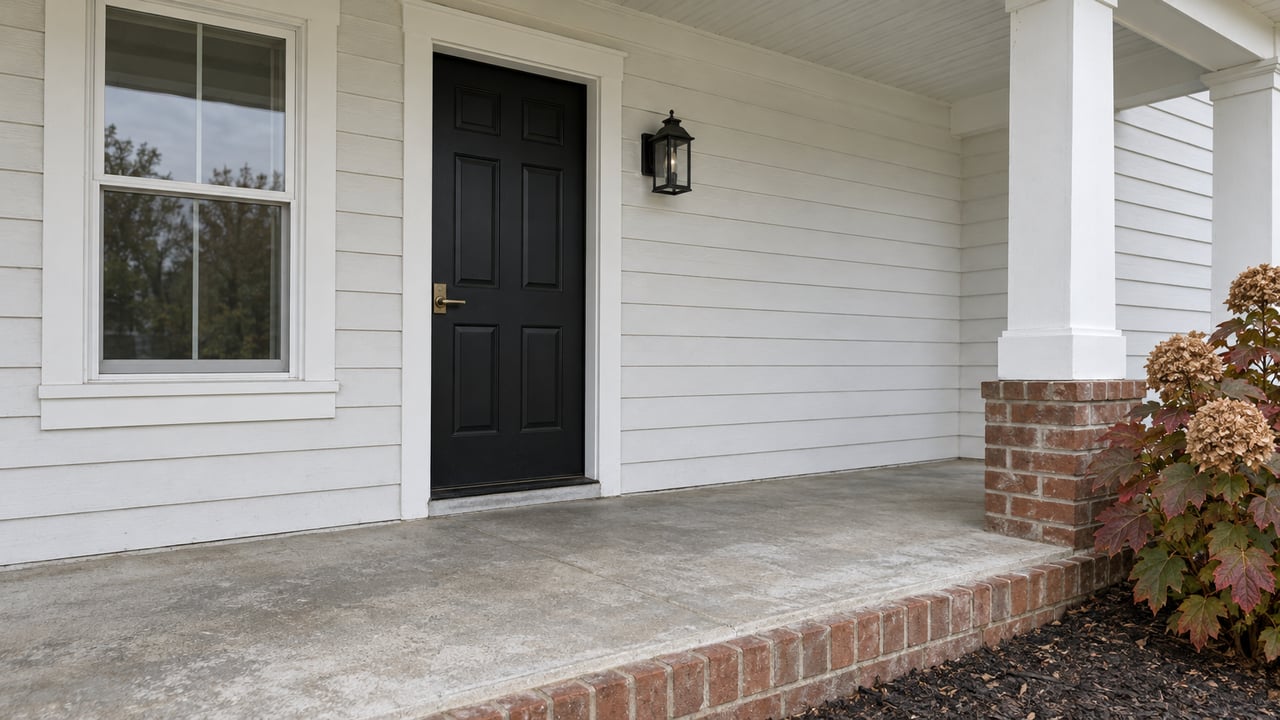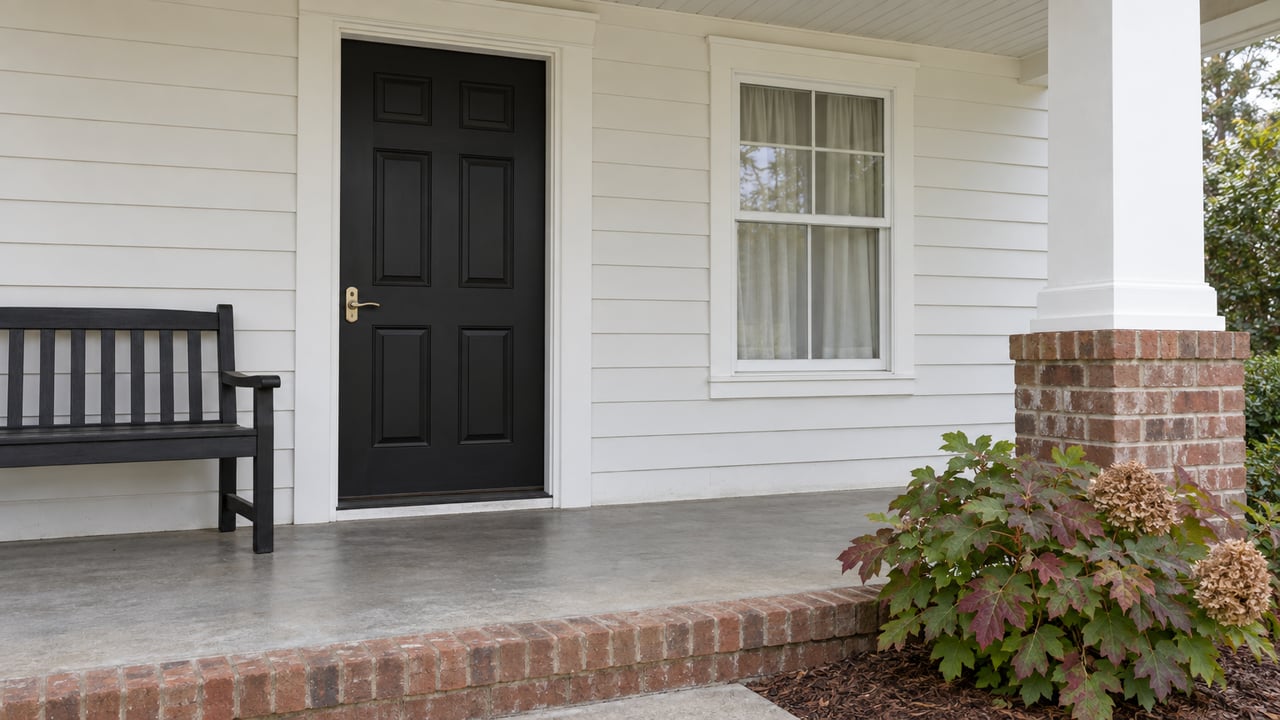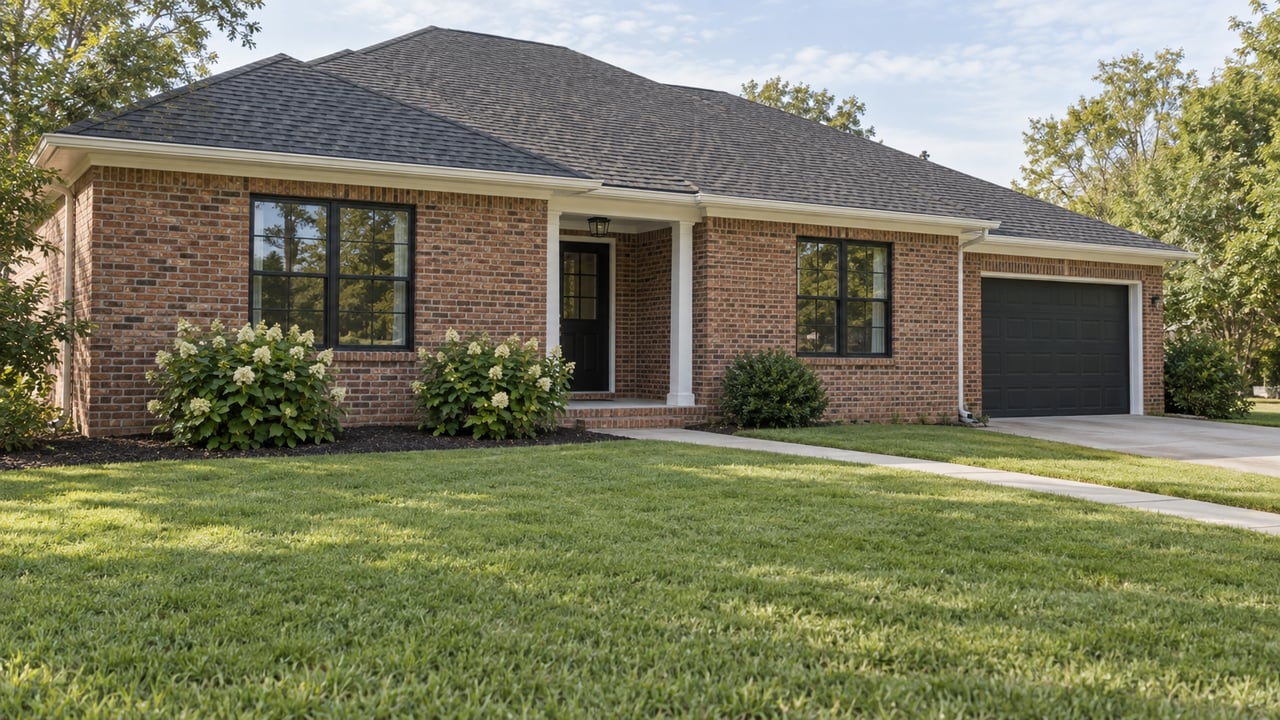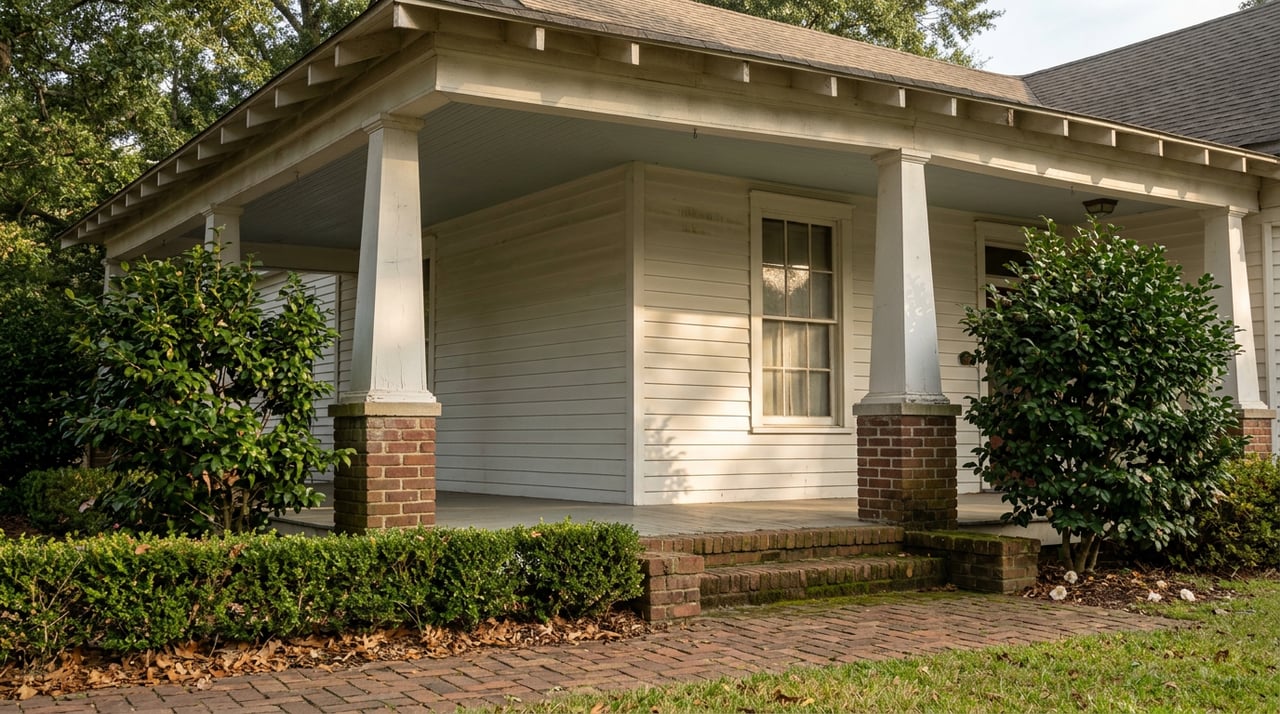
Two houses can sit three streets apart in Hernando, both built in the 1920s, both with the same wood siding and double-hung windows, and only one of them sits inside a mapped historic district. The difference has nothing to do with the house's age, its condition, or how it looks from the curb. It comes down to which side of a mapped boundary line the parcel sits on, and most buyers circling Hernando's Courthouse Square never think to ask where that line actually runs.
According to the Mississippi Department of Archives and History, Hernando has four separate historic districts listed on the National Register of Historic Places: the Hernando Courthouse Square Historic District, listed in 1998, the Commerce Street Historic District and the South Side (Magnolia) Historic District, both listed in 2001, and the North Side Historic District, also listed in 2001. Each has its own boundary. The LivingPlaces description places the Courthouse Square district roughly along Highway 51 South, Losher Street, Caffey Street, and West Commerce Street. According to National Register of Historic Places, the South Side district is roughly bounded by Oak Grove Road, Magnolia Drive, West Center Street, and Church Street.
What actually changes once you're inside the line
The City of Hernando says its Historic Preservation Commission oversees the Historic Preservation District section of the city's zoning ordinance and grants what's called a Certificate of Appropriateness for covered work within the district.
This overlay zoning is formally called the H-1 Historic Overlay Zoning District in Hernando's zoning ordinance, and it works alongside the other planned and overlay districts the city uses for commercial and residential development.
Separately, The City of Hernando says it has adopted the 2024 International Building Code and 2023 National Electric Code for construction and remodeling.
The square itself carries an extra rule
The Courthouse Square district is the one place in Hernando where this gets stricter still. The Advisory Council on Historic Preservation says new infill construction there is required to be compatible with historic downtown architecture, a rule tied to preserving the square's original Spanish grid layout. More than 75 percent of the buildings on the square have already been renovated under this framework, and Hernando was the first city in Mississippi's Main Street program to earn Small Town Main Street status, back in 1997. If you're picturing a mixed-use property or a commercial building facing the square, the compatibility standard is doing real work in shaping what gets approved, not just what gets discussed at a meeting.
There's one more layer worth knowing about if you're looking at a specific address rather than a general area. The LivingPlaces account identifies the Felix LaBauve House on Magnolia Drive as a Mississippi Landmark.
Hernando is also one of Mississippi's Certified Local Government communities, a designation it shares with a short list of other Mississippi towns including Senatobia. That status ties Hernando's local preservation commission into the state process run by the Mississippi Department of Archives and History, which is the agency that authorizes the historic districts in the first place. It's a credentialing detail more than a rule that affects a renovation, but it explains why the commission's reviews carry real weight rather than functioning as a rubber stamp.
What this means before you write the offer
If you're a buyer who loves the character of an older Hernando home and you're planning to update it once you close, confirm early whether the property sits inside a district. If your financing or your moving timeline is tight, that's worth knowing before you waive an inspection contingency, not after.
If you're selling a home inside one of the four districts, buyers doing their homework will eventually ask whether the house sits inside the mapped boundary and whether any exterior work on the property went through the commission. Having that answer ready, along with any past approvals, saves a round of questions later in the transaction.
A few practical steps before you write or accept an offer on a home near the square:
- Confirm with the City of Hernando's Office of Planning whether the specific parcel, not just the general area, sits inside one of the four mapped districts.
- Ask whether the property carries any individual landmark designation on top of district status.
- If you're planning exterior renovations, ask how recent Certificate of Appropriateness applications for similar work in that district have gone, and build that review time into your renovation schedule.
- If you're selling, be ready to share what you know about the property's historic status and any past commission approvals so buyers can plan accordingly.
A short FAQ
How do I find out if a specific house is inside one of the districts? The city's Office of Planning administers the Historic Preservation Commission and the underlying zoning map, and is the most reliable place to confirm boundary status for a specific address before you make plans around a renovation.
Buying near Hernando's square means buying into a piece of a town that has protected its character on purpose for decades. That's part of what makes those blocks worth wanting.
If you're weighing a historic-district address against a newer build farther out, or you're getting ready to sell a home inside one of these boundaries and want to price and market it with that context built in, Heather L Williams can walk you through what a specific address is actually subject to before you write the offer or list the house. Let's Connect — Get Your Free Home Valuation.
This article is general information, not legal, tax or financial advice. Consult a qualified professional about your situation.